
A hurried turn, an unfastened helmet or a child stepping out from behind a parked vehicle can change an ordinary journey in seconds. Following road safety rules begins with everyday decisions: slowing down, paying attention and making space for others. These habits matter on school runs, neighbourhood walks and longer journeys alike.
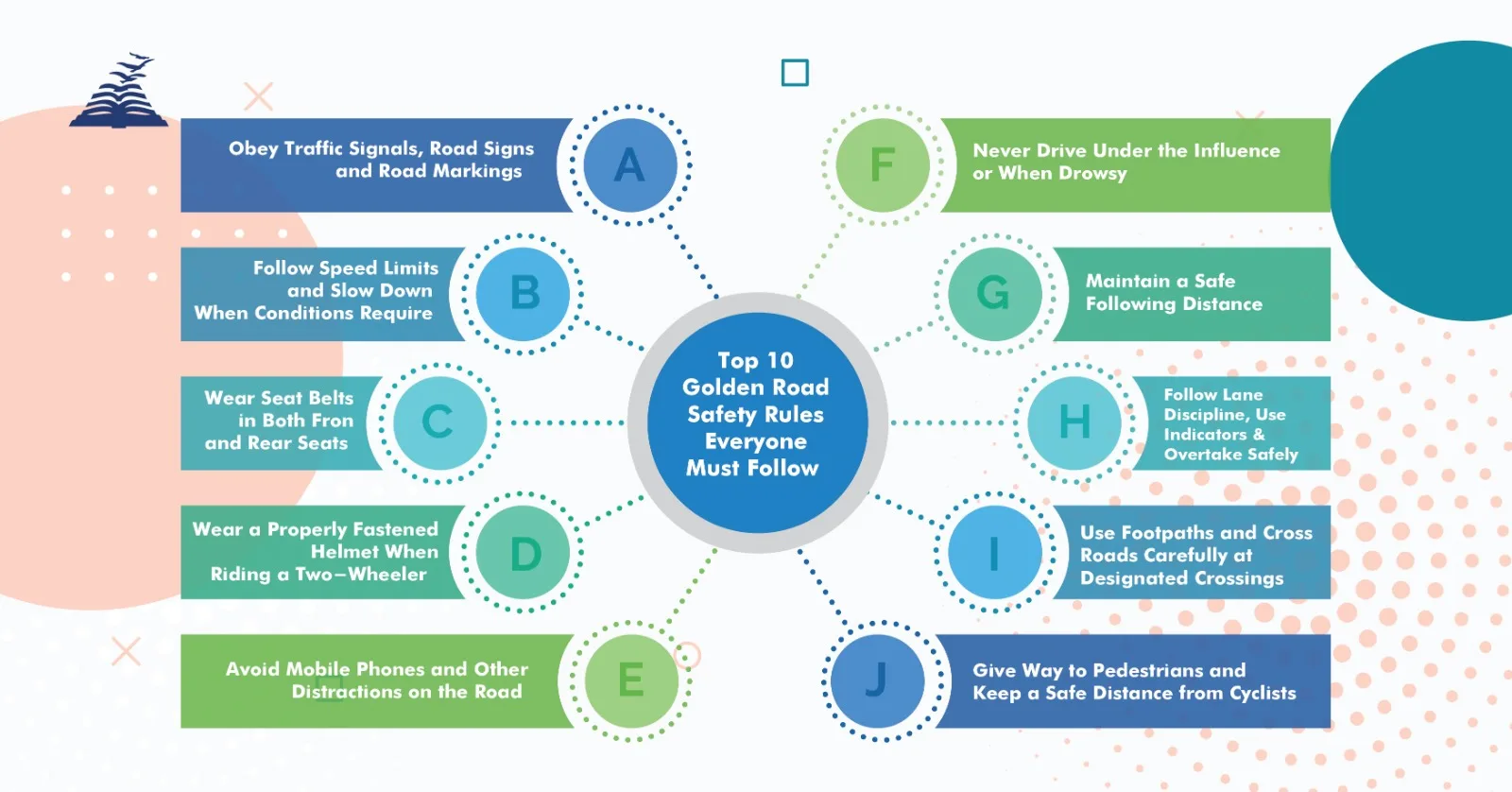
Table of Contents
Why Road Safety Matters for Every Road User
The 10 golden rules for road safety help drivers, passengers, pedestrians and cyclists share roads responsibly. Safe behaviour works alongside well-maintained vehicles, safer roads and effective enforcement to reduce the risk of crashes and injuries.
Rule 1: Obey Traffic Signals, Road Signs and Road Markings
Following basic traffic rules in India means stopping at red lights, respecting stop lines and obeying traffic officers’ directions. Read lane arrows and signs early. Never assume another driver’s decision to proceed makes it safe for you.
Rule 2: Follow Speed Limits and Slow Down When Conditions Require
Among the important road safety rules, adjusting speed deserves daily attention. Stay within posted limits and slow further near schools, crowded streets, bends and waterlogged roads. Leave enough time to react to unexpected movement.
Rule 3: Wear Seat Belts in Both Front and Rear Seats
Make buckling up part of your road safety precautions before the vehicle moves. Everyone should use their own belt, including rear-seat passengers. Children need an appropriate child restraint suited to their size.
Rule 4: Wear a Properly Fastened Helmet When Riding a Two-Wheeler
Both rider and pillion passenger should wear correctly fitting helmets with secured chin straps, even on short trips. Choose a genuine BIS-certified, ISI-marked motorcycle helmet; an ordinary cap or loosely worn helmet offers inadequate protection.
Rule 5: Avoid Mobile Phones and Other Distractions on the Road
Understanding traffic rules and road safety includes recognising distractions. Set navigation before departure and stop somewhere safe before using your phone. Pedestrians should put screens away while crossing; cyclists need their attention on surrounding traffic.
Rule 6: Never Drive Under the Influence or When Drowsy
Arrange alternative transport after drinking alcohol or taking substances that impair driving. If you feel sleepy, stop safely and rest. Check medicine warnings before driving, and ask a pharmacist when their effects are unclear.
Rule 7: Maintain a Safe Following Distance
Useful road safety tips include leaving enough space to respond if the vehicle ahead brakes suddenly. Increase that gap in rain, poor visibility or slippery conditions. Tailgating reduces your options when something unexpected happens.
Rule 8: Follow Lane Discipline, Use Indicators and Overtake Safely
Check mirrors and blind spots before changing lanes. Signal early and move only when there is space. Avoid weaving between vehicles or overtaking where visibility is restricted. An indicator communicates intention; it does not guarantee priority.
Rule 9: Use Footpaths and Cross Roads Carefully at Designated Crossings
Use footpaths and designated crossings wherever available. Stop, look in every direction and check turning traffic before crossing. Keep watching as you walk across. Avoid stepping between parked vehicles, where drivers may not see you.
Rule 10: Give Way to Pedestrians and Keep a Safe Distance from Cyclists
Approach pedestrian crossings slowly and yield as required. Give cyclists sufficient passing space and wait when overtaking safely is impossible. Check for approaching cyclists before opening a vehicle door.
School Bus Safety: Boarding and Getting Off Safely
Teach children the road safety guidelines for bus stop: wait away from traffic, board only after the bus stops and use the handrail. Never cross immediately in front of or behind it. Wait safely until visibility is clear, then use a suitable crossing with adult supervision. At Presidency Group of Schools, the buses are equipped with GPS tracking, CCTV and trained staff on board.
Learn more about our GPS-enabled transport.
Cycling Safety and Walking Where There Is No Footpath
Cyclists should wear a fitted cycling helmet, check brakes and travel with traffic, keeping left. Choose quieter routes and use lights when visibility is poor.
Without a footpath, pedestrians should walk along the right edge facing approaching traffic. Keep children close and choose another route if the roadside is unsafe.
Hand Signals, Road Signs and Emergency Steps for Children
Teach children of best schools in Bangalore to recognise traffic officers’ stop signals. Practise cycling hand signals with adult guidance in a traffic-free space before riding on roads.
Sign | What children should understand |
STOP | Traffic must stop |
Pedestrian crossing | A designated crossing location |
School ahead | Watch for children and slow down |
In an emergency, move to a safe place and call India’s emergency number, 112. Give the location, nearby landmark and incident details. Children should alert a trusted adult and stay away from moving traffic.
How Parents and Schools Can Build Responsible Road Safety Habits
Build road safety awareness through consistent examples. Adults should buckle up, wear helmets and use crossings themselves. Schools can reinforce these habits through demonstrations, supervised practice and clear pickup arrangements.
Practising Safe Walking, Cycling and School Bus Travel with Children
- Walk the school route together.
- Identify safe crossings and waiting places.
- Practise checking traffic before stepping out.
- Rehearse what to do if transport is delayed.
Inspiring Responsible Choices at Presidency Group of Schools
The habits children of top schools in Bangalore develop today can help them make thoughtful choices throughout life. Understanding road safety rules encourages awareness, patience and respect for others, qualities that also matter in the classroom and community. Presidency Group of Schools places importance on academic learning alongside values and personal development, helping students grow into responsible individuals. Discover an education that encourages your child to think carefully, act considerately and recognise how everyday choices can contribute to their own wellbeing and the safety of others.
Conclusion
Make your next journey an opportunity to practise these road safety rules: secure everyone’s restraints, put distractions away and allow time to travel without rushing. Children learn from what adults do, so demonstrate safe crossing, patient driving and considerate behaviour consistently. Whether you walk, cycle, ride or drive, remember that others share the road with you. A few careful decisions on every trip can help protect your family and the people around you.
Recent Blogs




Buckle up before every journey, regardless of distance.
They need properly fitting helmets with fastened straps.
Walk along the right edge, facing approaching traffic.
They should wait safely until visibility is clear and cross with appropriate supervision.
Call 112 and clearly explain your location and the emergency.