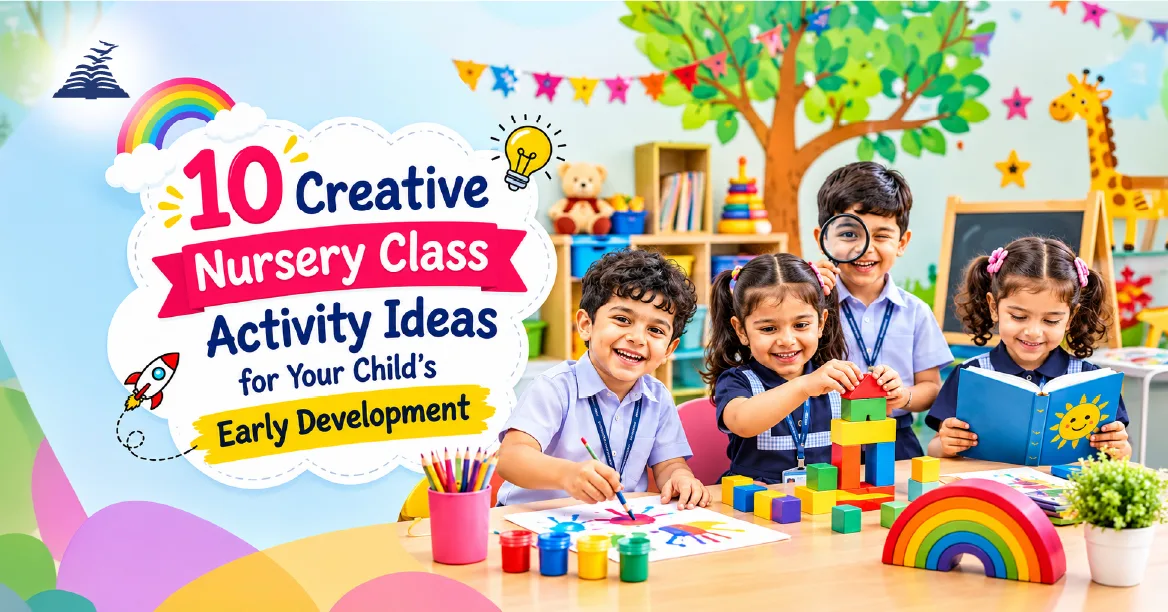
Why Play-Based Activities Matter in the Nursery Years
Through play based learning for pre-schoolers, children practise making choices, sharing materials and trying again when something does not work. Adults can extend learning with gentle questions while allowing children to lead.
Sorting, remembering story events and testing a block tower offer opportunities for cognitive development in early childhood. Keep the experience enjoyable rather than turning every activity into a test.
When comparing the best nursery schools in Bangalore, ask how teachers observe play, respond to different interests and help children participate comfortably.
10 Nursery Activities to Try in the Classroom or at Home
These nursery class activity ideas use familiar materials. Offer one or two at a time and follow your child’s interest. Supervise closely, choose age-appropriate supplies and avoid small parts, sharp edges and loose cords. Check paint and dough ingredients for allergies.
Activities 1–2: Finger Painting and Paper-Tearing Collages for Creative Expression
1. Finger painting: Place washable, non-toxic finger paint on a tray beside large paper. Let children make dots, swirls or handprints. Describe their movements and colour choices without asking them to copy a finished picture. Offer a brush if touching paint feels uncomfortable.
2. Paper-tearing collage: For an easy activity for nursery class, offer paper strips, card and a child-safe glue stick. Children tear and arrange pieces however they wish. Tearing and pressing provide practice using their hands together. Keep scraps out of mouths.
Let children describe their artwork instead of deciding what it represents for them. Exploring materials matters more than producing matching pictures.
Activities 3–4: Playdough Modelling and Texture Hunts for Sensory Exploration
3. Playdough modelling: Provide age-appropriate, non-toxic dough and large, blunt tools. Invite children to roll, flatten and squeeze it into pretend food or animals. Talk about shapes and sizes. Dough is for playing, not eating; supervise throughout.
4. Texture hunt: Gather large, clean fabric pieces, corrugated cardboard and a smooth wooden block. Invite children to find something soft, rough or smooth. Let them look before touching and skip textures they dislike. Compare two items using descriptive words.
Activities 5–6: Puppet Storytelling and Pretend Shops for Language and Social Skills
5. Puppet storytelling: Use a plain sock puppet without detachable decorations. Begin a short story about a character who loses a toy. Let your child suggest what happens next. Take turns speaking and welcome stories in the language they use confidently.
6. Pretend shops: Arrange large toy groceries and a shopping basket on a low table. Take turns as shopkeeper and customer, practising greetings and requests. Count a few items together. Use paper price cards instead of real coins.
Activities 7–8: Colour Sorting and Block Building for Early Maths and Problem-Solving
7. Colour sorting: Offer large blocks in two colours and matching containers. Invite children to group them, then count together. Once comfortable, try sorting by shape instead. Allow time to notice differences without rushing to correct each choice.
8. Block building: Set out large building blocks on the floor. Suggest making a bridge for a toy vehicle. Explore what happens when the base becomes wider. When it falls, encourage another attempt rather than rebuilding it yourself.
Activities 9–10: Action Rhymes and Simple Obstacle Courses for Movement and Coordination
9. Action rhymes: Choose a familiar rhyme with clapping, stretching or marching. Demonstrate slowly, then let children suggest movements. Pause occasionally so they can recall the next action. Offer seated movements so everyone can join comfortably.
10. Simple obstacle course: Create a short route using flat floor markers and stable, low foam obstacles. Practise walking around and stepping over them. Keep surfaces clear and non-slip, supervise within reach and adapt the route to each child’s abilities.
Presidency Group of Schools: Inspiring Little Minds Through Creative Early Learning
Every child’s learning journey begins with curiosity, imagination, and joyful exploration. At Presidency Group of Schools, early childhood education focuses on nurturing young minds through engaging nursery activities, play-based learning, and creative experiences. From storytelling and hands-on activities to music, art, and interactive games, children are encouraged to explore, express themselves, and develop essential cognitive, social, and emotional skills. With a nurturing environment and child-centric approach, the schools lay a strong foundation for lifelong learning and holistic development.
Conclusion
Creative nursery activities for kids of age 3 to 7 years play a vital role in nurturing a child’s curiosity, imagination and overall development. From sensory exploration and storytelling to art and movement, these engaging experiences help children develop essential cognitive, social, emotional and motor skills. Parents and educators can make early learning more meaningful by encouraging exploration, creativity and independent thinking through play. By creating a safe, supportive and stimulating environment, every activity becomes an opportunity to build confidence, discover new abilities and develop a lifelong love for learning.