
Pulses are an important part of Indian food culture and everyday nutrition. From dal and sambar to sprouts, curries, khichdi, sundal, and salads, pulses in India are used in many simple and healthy dishes. They are affordable, easy to cook, rich in nutrients, and suitable for people of different age groups.
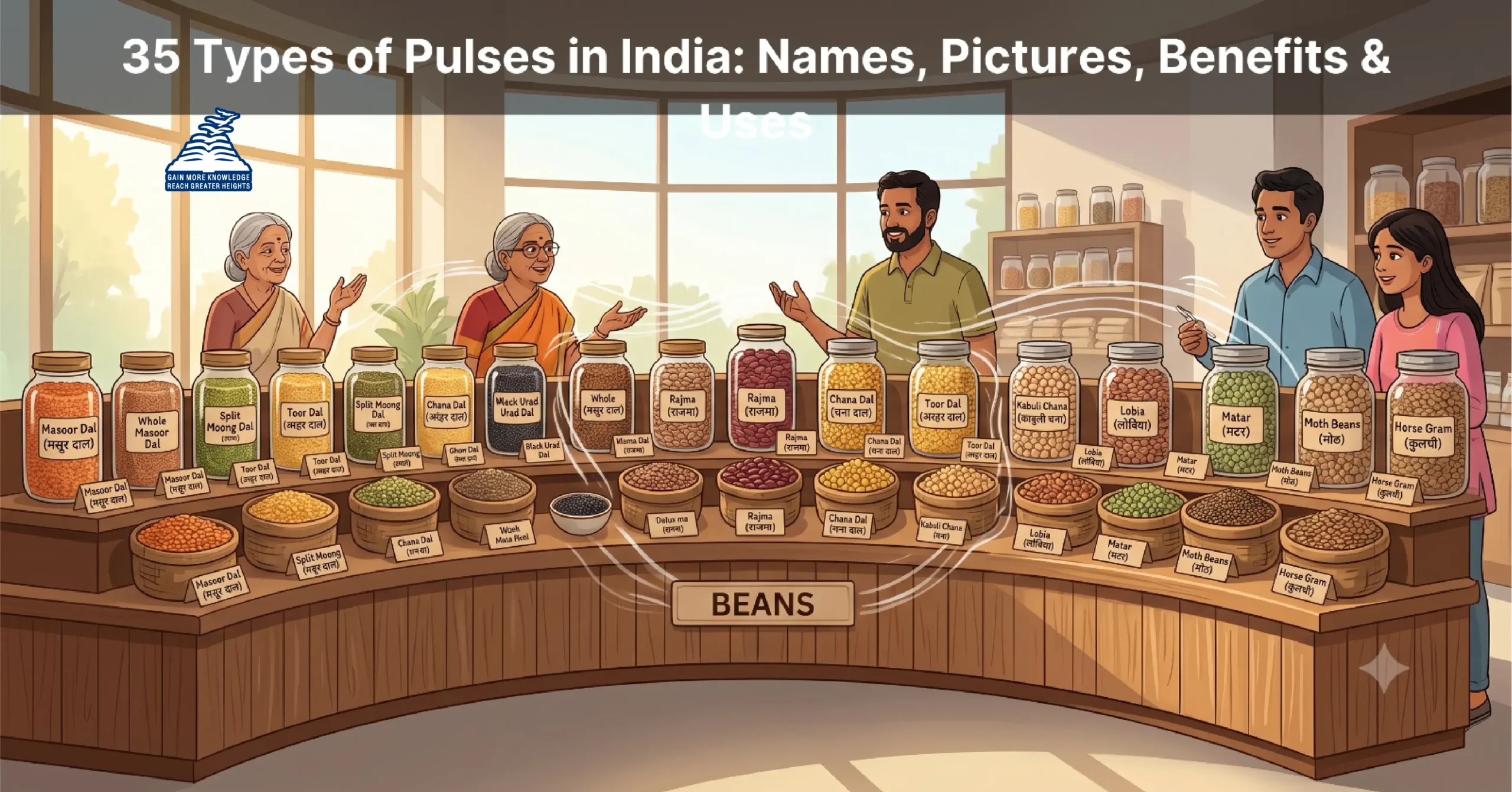
What Are Pulses?
Pulses are the edible seeds of legume plants. They are usually dried and used for cooking. Lentils, peas, beans, and grams are common types of pulses in India that are eaten in different forms such as whole, split, polished, unpolished, sprouted, or powdered.
Why Pulses Are Important in Indian Food
Indian pulses are widely used because they provide plant-based protein, fibre, iron, folate, potassium, and other nutrients. For many vegetarian families, pulses are one of the main protein sources. They also make meals filling and can be combined with rice, roti, vegetables, or millets for a balanced diet.
Common Pulse Names Used at Home
Learning pulses names helps children identify different dals and beans used in Indian kitchens. Names like toor dal, moong dal, urad dal, chana dal, masoor dal, rajma, lobia, and green peas are commonly heard in homes, markets, and school nutrition lessons.
Pulses Names in English for Students
Knowing pulses names in English is useful for students because it improves vocabulary and food awareness. For example, toor dal is called pigeon pea, chana dal is split Bengal gram, masoor dal is red lentil, rajma is kidney bean, and lobia is black-eyed pea.
Pulses with Pictures for Easy Learning
When children learn pulses with pictures, they can identify food items more easily. Teachers and parents can show real pulses in bowls, flashcards, charts, or market images. For example, rajma is kidney-shaped and reddish brown, green gram is small and green, while chickpeas are round and beige. Using pulses with images is helpful in classroom learning. Students can prepare charts, label different pulses, match Indian names with English names, and understand how each pulse is used in food. This makes nutrition education more practical and visual.
35 Types of Pulses in India with Pictures
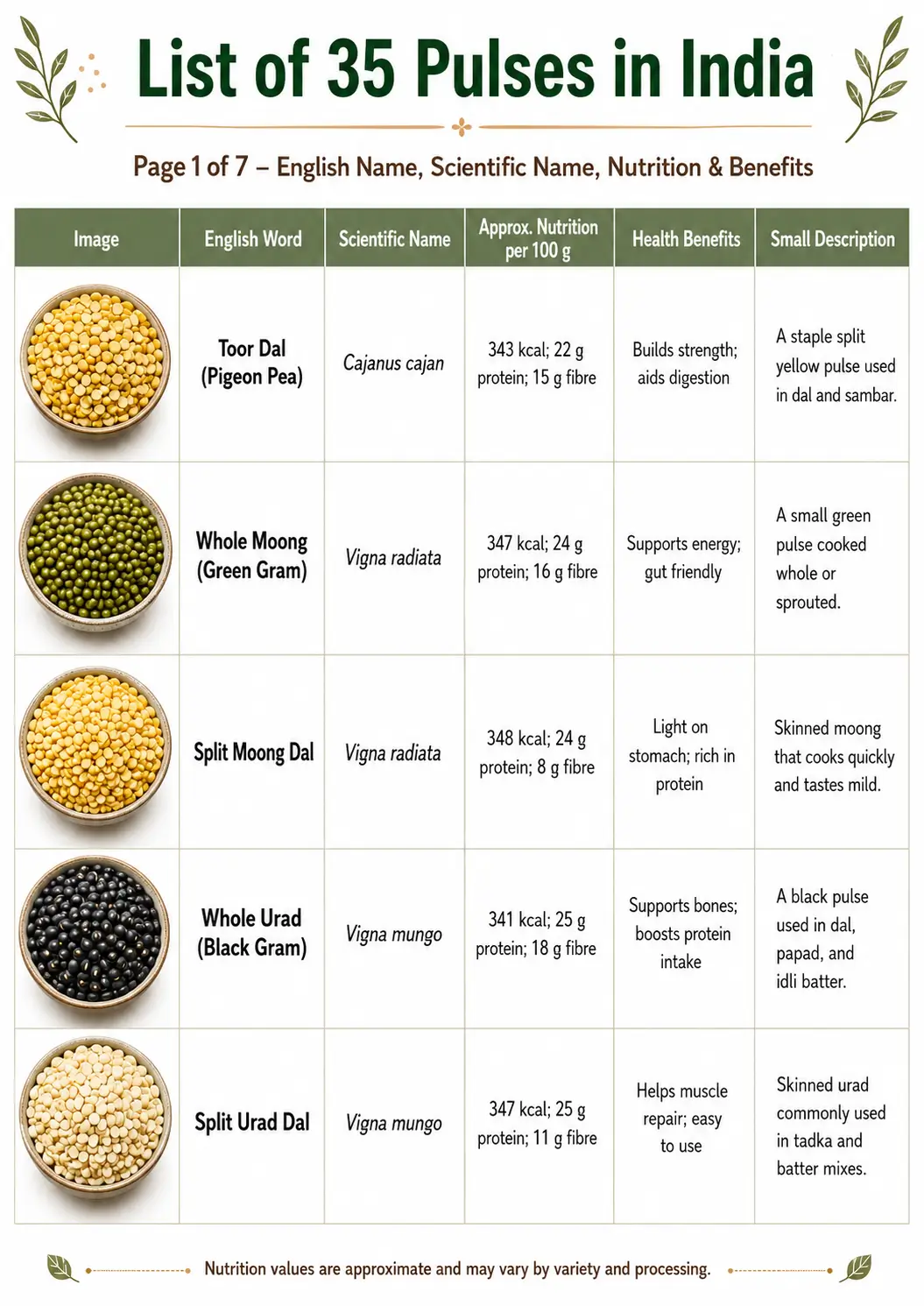
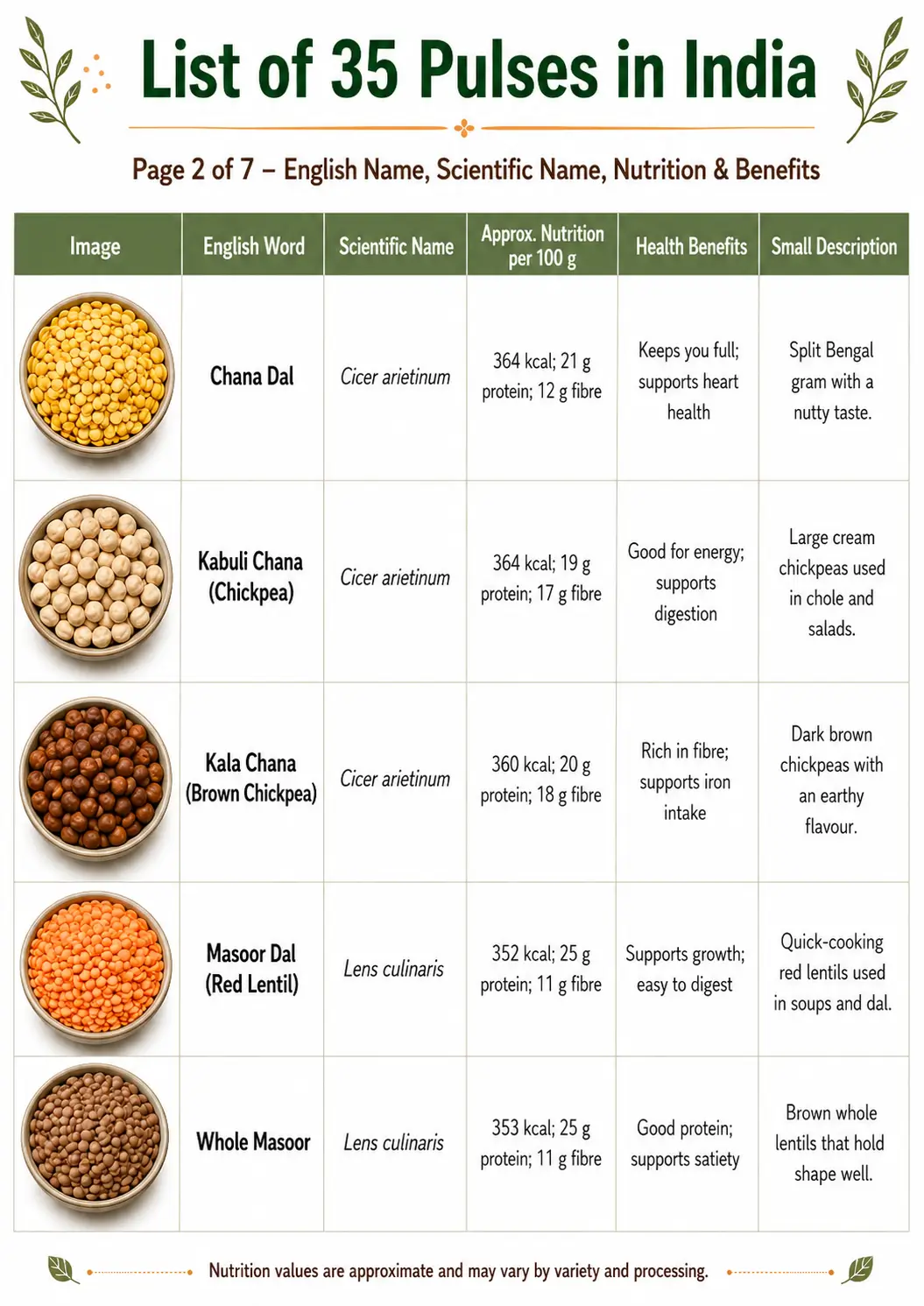
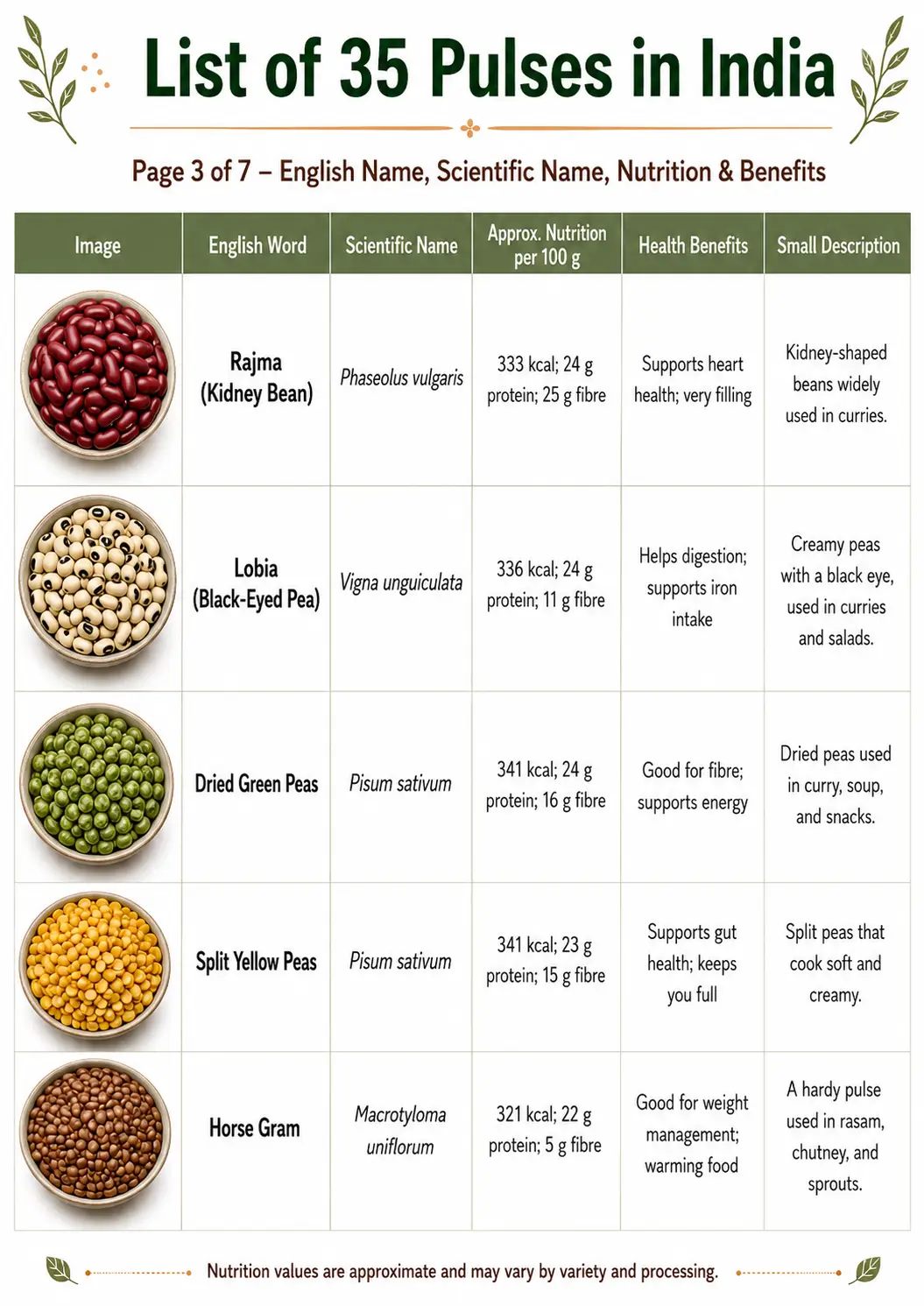

Different Types of Pulses Used in Cooking
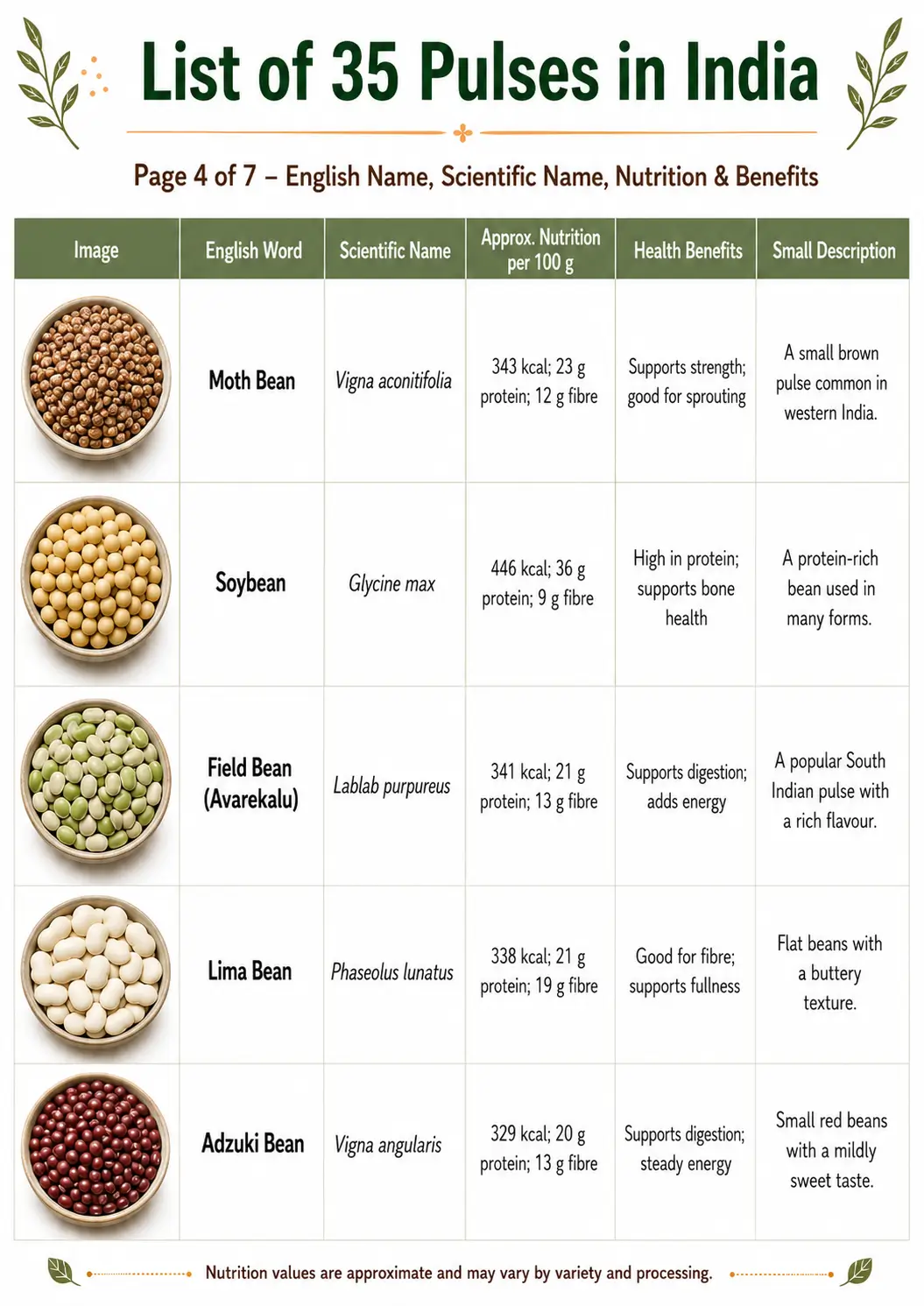
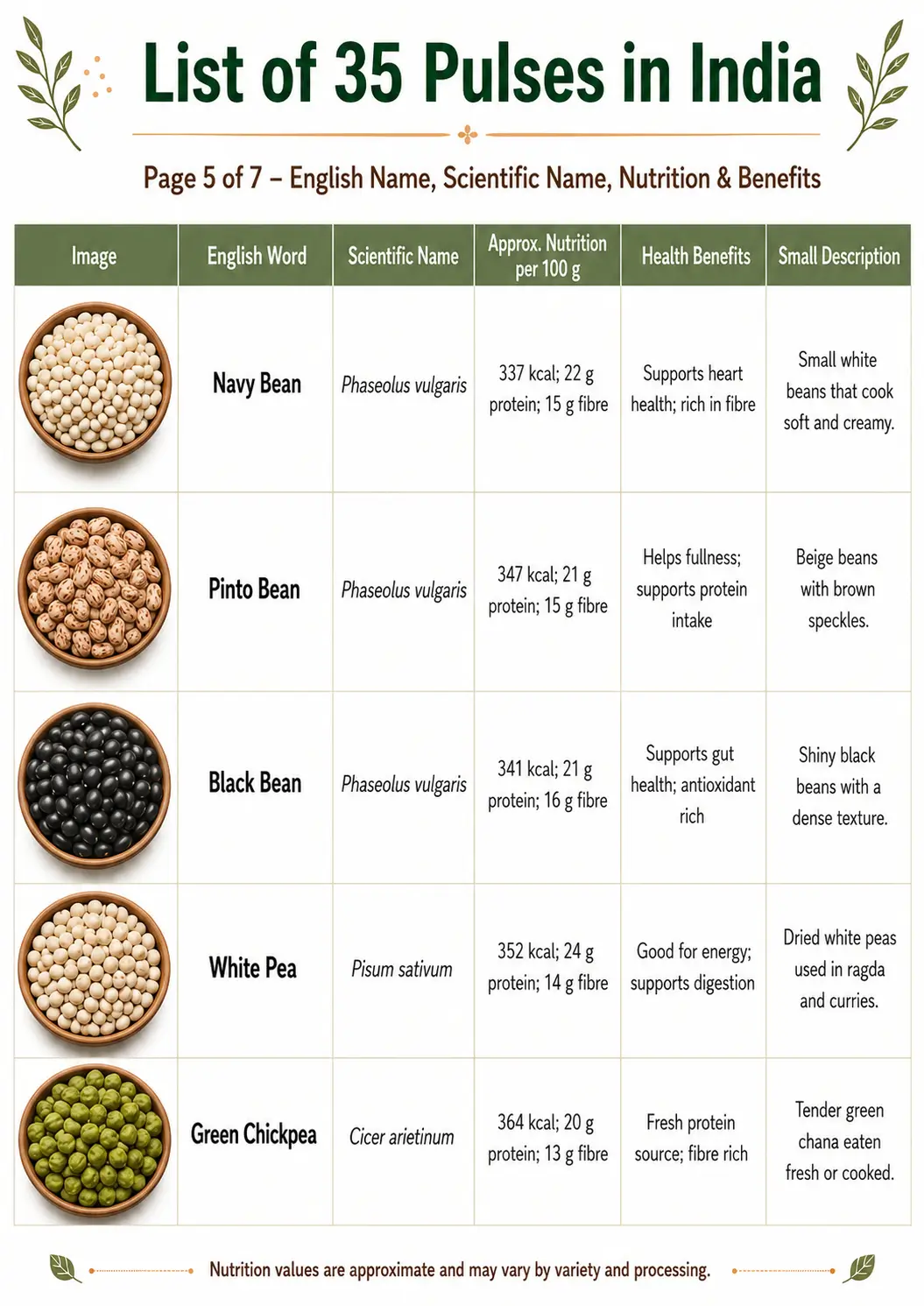
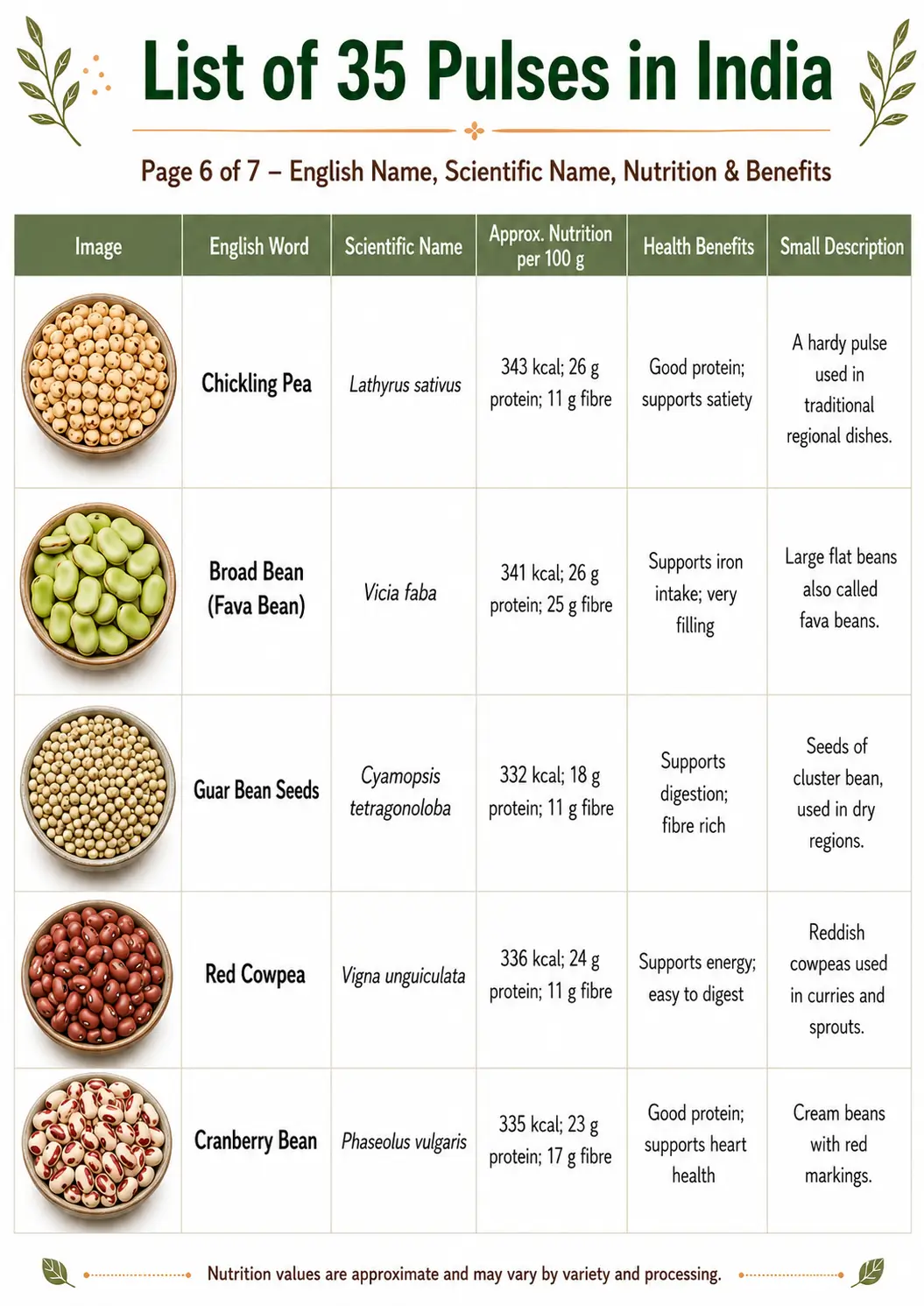
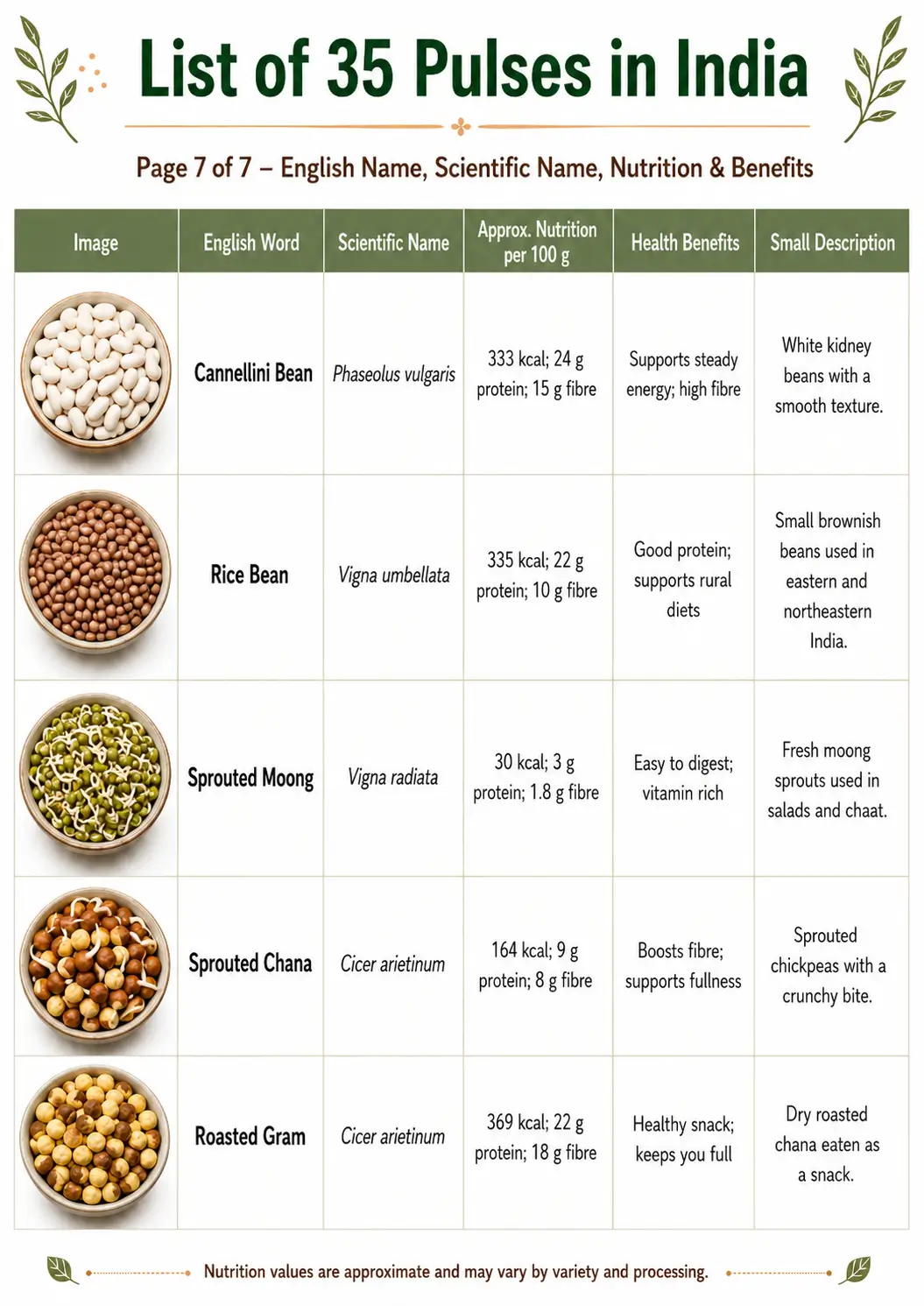
There are different types of pulses used in Indian kitchens, and each has its own texture, taste, and cooking style. Soft dals like moong and masoor cook quickly, while rajma, chickpeas, and black gram need soaking and longer cooking. Sprouted pulses are also used in salads and breakfast dishes.
Pulses Benefits for Health
The pulses benefits are many when they are included as part of a balanced diet. Pulses support growth, provide plant-based protein, improve digestion because of fibre, and keep the stomach full for a longer time. They also help children understand the importance of traditional Indian foods.
Why Students Should Learn About Pulses
In many top schools in Bangalore, food vocabulary and nutrition topics are taught through charts, activities, worksheets, and health awareness sessions. Learning about pulses helps students connect English vocabulary, science, health education, and everyday eating habits.
Pulses and Balanced Meals
The best schools in Bangalore often encourage students to understand food groups and healthy plate concepts. Pulses can be paired with cereals like rice, wheat, ragi, or millets to make meals more balanced. Examples include dal-rice, idli-sambar, chana-roti, rajma-chawal, and moong khichdi.
Learning Pulses Through Classroom Activities
The top 10 schools in Bangalore focus on activity-based learning where children can touch, observe, compare, and classify food items. A pulse identification activity can help students learn colour, size, shape, names, spellings, and nutritional value in a simple and memorable way.
Simple Ways to Include Pulses in Daily Meals
Pulses can be added to meals in many easy ways. Families can prepare dal, sprouts, chana curry, rajma, sambar, sundal, dosa batter, soups, parathas, and salads. Children who do not like one type of pulse may enjoy another form, such as sprouted moong, chana chaat, or dal khichdi.
Tips for Including Pulses in Daily Meals
- Soak hard pulses before cooking
- Use sprouted pulses in salads
- Add dal to soups and khichdi
- Try different dals every week
- Combine pulses with rice, roti, or millets
- Use besan for cheela, pakora, and dhokla
- Introduce children to pulses through simple recipes
Learning Indian Pulses for Healthy Food Awareness
Learning the list of 30 pulses in India with pictures helps students understand different types of nutritious foods used in everyday Indian meals. At Presidency Group of Schools, children are encouraged to explore pulses such as toor dal, moong dal, chana dal, urad dal, masoor dal, rajma, chickpeas, green gram, horse gram, and black gram through charts, images, classroom activities, and health-based discussions. This visual and practical learning approach helps students identify pulses easily, understand their nutritional value, and recognise their importance in building strength, energy, immunity, and overall health. By connecting food awareness with holistic education, Presidency Group of Schools inspires students to develop healthy eating habits and make informed choices from a young age.
Conclusion
Pulses are an important part of Indian food and healthy eating. They are rich in nutrients, easy to include in daily meals, and available in many varieties. From toor dal and moong dal to rajma, chana, masoor, lobia, and horse gram, every pulse has its own taste and use. Learning the names of pulses helps students improve vocabulary, food knowledge, and awareness about balanced nutrition. With regular use, pulses can make meals healthier, tastier, and more satisfying.